Where You Sit Changes What You Remember — The Weird Science of Context-Dependent Memory and Why Your Study Spot Matters More Than Your Flashcards
You spent six hours reviewing organic chemistry. Highlighted every page. Rewrote your notes twice. And then you walked into the exam hall, sat down, and your brain went completely blank.
Sound familiar? Yeah. It happens to roughly 40% of college students at least once a semester, according to a 2019 survey by the American College Health Association. But here's what nobody told you: the problem wasn't your studying. It was where you studied.
The Scuba Divers Who Changed Everything
Back in 1975, two British psychologists — Duncan Godden and Alan Baddeley — did something genuinely ridiculous in the name of science. They recruited a group of scuba divers and made them memorize lists of words. Half the divers learned the words on dry land. The other half? Underwater. At the bottom of a lake. In full scuba gear. While fish swam by.
Then came the twist. Each group was tested in both locations — some recalled on land, others recalled underwater.
The results were borderline absurd: divers who learned underwater and were tested underwater remembered 47% more words than divers who learned underwater but were tested on land. Same brain, same words, same amount of study time. The only difference was the room. Or, well, the lake.
This wasn't a fluke. Godden and Baddeley had stumbled onto something psychologists now call context-dependent memory — the idea that your brain doesn't just store facts in isolation. It wraps them in the sounds, smells, lighting, and even the temperature of wherever you happened to be sitting when you learned them.
Your Brain Is a Location Tag Machine
Think of your memory like a filing cabinet with terrible labels. Instead of organizing by topic ("Chapter 7: Mitosis"), your hippocampus files things more like "that thing I learned while sitting near the window with coffee brewing and some guy outside arguing about parking."
This isn't a bug. Dr. Elizabeth Loftus at UC Irvine — probably the most cited memory researcher alive — has spent decades showing that memory is reconstructive, not reproductive. You don't play back a recording. You rebuild the scene. And the more environmental cues match between encoding (studying) and retrieval (testing), the better you rebuild.
Here's where it gets practical. And a little annoying.
The Study Spot Problem Nobody Talks About
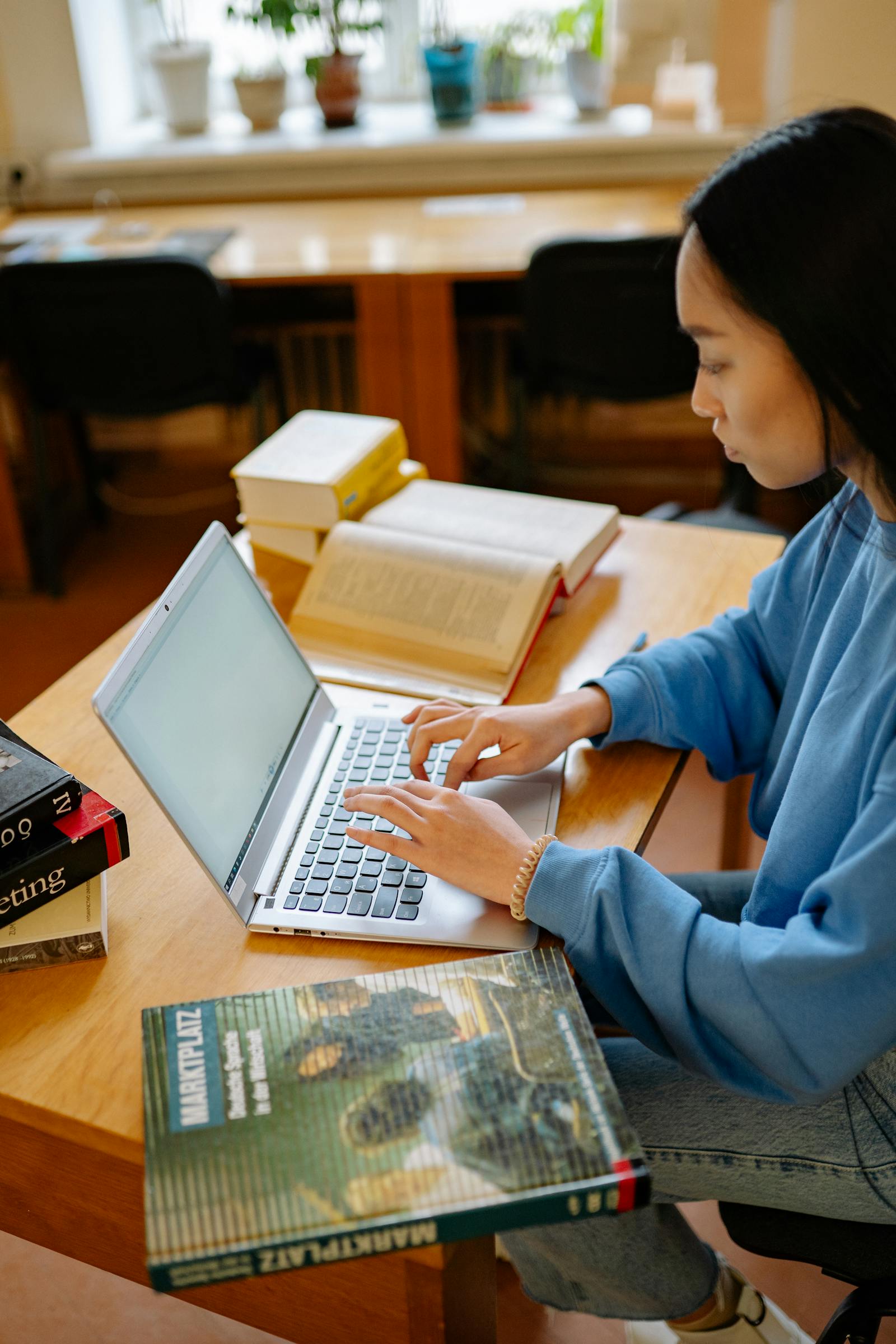
Most study advice goes like this: find a quiet place, eliminate distractions, sit there for hours. Maybe a library. Maybe your desk. The assumption is that consistency equals results.
Except... Dr. Robert Bjork at UCLA demonstrated almost the opposite in a series of experiments starting in the late 1970s. Students who studied the same material in two different rooms performed 40% better on a surprise test than students who studied in the same room both times.
Wait, what? Studying in more* places makes you remember *more?
Yep. And the reason is beautiful in its weirdness. When you study in one location, your memory gets tangled up with that specific place. The recall cue is narrow — it only fires when you're back in that exact context. But when you study across multiple environments, your brain is forced to build more abstract, portable representations of the material. It can't rely on "the coffee shop with the wobbly table" as a cue, so it actually has to understand the content.
Bjork calls this desirable difficulty — making learning harder in the short term to make it stronger in the long term.
So Where Should You Actually Study? A Framework.
Before we go further: this isn't about studying in 47 different Starbucks. There's a sweet spot, and it looks something like this.
1. The Two-Location Minimum
At bare minimum, study the same material in at least two different physical environments. Your dorm room AND the library. A coffee shop AND a park bench. The specific locations matter less than the fact that they're different.
Dr. Nicholas Soderstrom — a former student of Bjork's, now at Washington University in St. Louis — published a meta-analysis in August 2023 showing that even two distinct environments produced a statistically significant improvement in delayed recall tests. The effect size was d = 0.38, which in psychology terms means "actually matters and isn't just noise."
2. Match Your Practice to Your Test Environment
Here's a trick that sounds too simple to work, but Dr. Steven Smith at Texas A&M has confirmed it multiple times: if you can, study in a room that physically resembles your exam room.
Fluorescent lights. Hard chairs. Rows of desks. That specific institutional staleness.
Most exam halls share these features. If your library has a similar vibe, study there at least once before the test. You're not being superstitious — you're pre-loading contextual cues that your brain will automatically reach for during recall.
If you can't physically access the exam room, try this instead: close your eyes during study sessions and imagine sitting in the exam hall. Visualize the rows, the clock on the wall, the proctor walking around. Smith's 2021 paper showed that even mental reinstatement of context improved recall by roughly 20% compared to a control group.
3. The Background Noise Question
This one sparks arguments. Some people swear by silence. Others can't study without lo-fi beats or coffee shop ambient noise.
The research says both camps are half-right. A 2012 study in the Journal of Consumer Research by Ravi Mehta (then at the University of Illinois) found that moderate ambient noise — around 70 decibels, roughly the level of a busy café — enhanced creative problem-solving compared to both silence and loud noise.
But for straight memorization? Silence wins. A 2017 study by Jared Cousins at Duke University showed that silence during encoding led to 15% better recall for fact-based material than moderate background noise.
Translation: if you're memorizing vocabulary or formulas, go quiet. If you're working through essay prompts or connecting ideas, a café might genuinely be better. Not because of vibes — because of how noise interacts with your attention system.
4. Don't Underestimate Physical State
Context-dependent memory isn't just about rooms. It extends to your body.
In a frankly wild 1984 experiment, psychologist James Eric Eich showed that mood at the time of learning dramatically affected recall. People who learned material while happy recalled it better when tested while happy. People who learned while slightly anxious? You guessed it — better recall when tested under mild stress.
This leads to an uncomfortable implication: the relaxed, cozy study session on your couch might actually hurt your exam performance, because exams are inherently stressful environments. Your brain encoded the material in chill mode, but you're trying to retrieve it in panic mode.
The mismatch kills recall.
One practical fix: do some of your studying under mild, self-imposed pressure. Set a timer. Use [practice tests with a countdown clock](https://quickexamai.com). Simulate the stress of the real thing. You're not torturing yourself — you're aligning your encoding state with your retrieval state.
The Myth of the Perfect Study Environment
Productivity YouTube has convinced a generation that the answer is a $3,000 desk setup with perfect lighting, a specific playlist, and a particular brand of matcha. And look — a comfortable workspace isn't bad. But the obsession with one perfect spot is actively working against your memory.
Dr. Pooja Agarwal at the Berkshire School and co-author of Powerful Teaching put it bluntly in a 2022 interview: "Students optimize for comfort when they should be optimizing for flexibility."
The data backs her up. Here's a rough hierarchy of what actually matters for exam performance, based on the cumulative research:
What matters most:
- Active recall (testing yourself) — effect size d = 0.70
- Spaced repetition — effect size d = 0.60
- Interleaving (mixing topics) — effect size d = 0.43
- Environmental variation — effect size d = 0.38
What matters least:
- Re-reading notes — effect size d = 0.10
- Highlighting — effect size d = 0.08
- Having a "perfect" study environment — not even measurable
Environmental variation ranks fourth. It's not a magic bullet. But when you combine it with active recall and spaced repetition? The effects multiply. A 2024 meta-analysis by Sana, Yan, and Kim across 34 studies found that students using all four strategies together scored, on average, 1.2 standard deviations above students using passive study methods. That's the difference between a C+ and an A-.
Putting It Together: A 5-Day Protocol
Here's a realistic system for your next exam. Nothing fancy. No expensive apps required — though if you want an AI to [generate practice questions from your notes](https://quickexamai.com/blog/turn-notes-into-practice-exams-step-by-step-system), that saves time.
Day 1 (Monday): First pass of the material. Study at home. Focus on understanding, not memorizing.
Day 2 (Tuesday): Active recall session at a different location — library, café, friend's apartment. Quiz yourself without looking at notes.
Day 3 (Wednesday): Switch locations again. This time, do practice questions under timed conditions. If your exam has multiple choice, [build mock tests](https://quickexamai.com) with a timer running.
Day 4 (Thursday): Return to your first location. But instead of re-reading, teach the material out loud. Explain it like you're tutoring someone. Hit the gaps hard.
Day 5 (Friday — exam day): Arrive early. Sit down. Before the exam starts, spend 2 minutes with your eyes closed, mentally reconstructing your study sessions — the rooms, the sounds, the feeling. This mental reinstatement primes your retrieval system.
That's it. Five days, three locations, zero highlighting.
Why This Matters Beyond Exams
Context-dependent memory doesn't retire after graduation. It follows you into every meeting, every presentation, every certification exam you'll ever take.
Dr. Henry Roediger III at Washington University — the guy who basically invented the modern testing effect research — made this point in his 2023 keynote at the Psychonomic Society conference: "The principles of encoding specificity don't care if you're 19 or 59. Your brain stores information the same way at every age. What changes is whether you bother to use what we know about it."
He's right, and it's a bit maddening. We've known about context-dependent memory since the 1970s. Godden and Baddeley published their scuba diver study almost fifty years ago. And yet most students — most people — still sit in the same chair, re-read the same highlighted pages, and wonder why they forget everything the moment the test lands on their desk.
You don't need a better brain. You don't need more hours. You might just need a different chair.
---
The QuickExam AI team writes about evidence-based study strategies that actually move the needle. If you're tired of study advice that recycles the same five tips, [check out more from our blog](https://quickexamai.com/blog) — or try our [AI-powered exam generator](https://aicraftguide.com/ai-exam-generators-compared) to see how different tools stack up.
Ready to Create Better Exams?
Join thousands of educators using QuickExam AI to save time and create engaging assessments.
Start Free Trial